

Blogs
Cryogenic Valves vs. Ball Valves
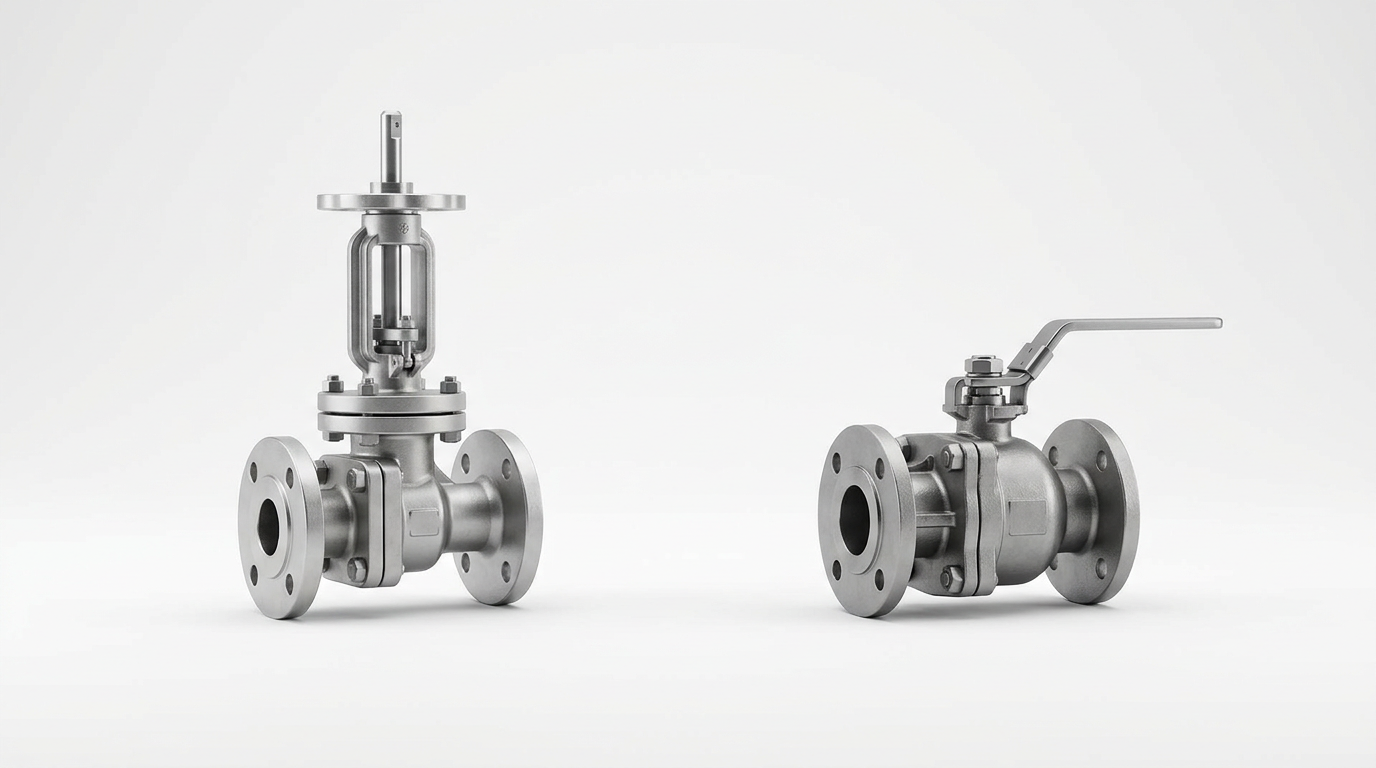
Cryogenic valve and ball valve are often compared as if they were competing product categories. They aren't. Cryogenic is a temperature classification — it describes a valve's operating range, typically below -150°C (-238°F), depending on the standard applied. Ball valve is a mechanism type — a quarter-turn design that uses a bored sphere to open and close flow. A ball valve can be built for ambient service or for cryogenic service; the same is true for globe, gate, and butterfly valves.
The real question buyers usually mean to ask is one of two things: how does a cryogenic-rated ball valve differ from a standard one, or which valve type — ball, globe, gate, or butterfly — should I choose for a cryogenic application. This article answers both.
Is "Cryogenic Valve" a Different Product Category Than "Ball Valve"?
No — cryogenic service is a design requirement that can be applied across valve types. Industry references on LNG valve selection consistently list four valve types suitable for cryogenic isolation duty: globe, gate, ball, and butterfly. Each can be manufactured to cryogenic specification, and each has trade-offs in cost, sealing performance, and size suitability that matter more than the "cryogenic vs. non-cryogenic" label alone.
This distinction matters practically: if you're specifying a valve for an LNG line, the decision isn't "cryogenic valve or ball valve" — it's "which valve type, built to cryogenic spec, fits my pressure, size, and flow-direction requirements."
What Makes a Ball Valve "Cryogenic"?
A cryogenic ball valve shares the same basic quarter-turn operating principle as a standard ball valve, but three design elements change to handle sustained exposure to liquefied gas:
Extended bonnet and stem. The stem is lengthened so the packing and operator sit above the cold zone, away from the valve body. This gap acts as a thermal-isolation column — it keeps the packing warm enough to seal properly and protects operating personnel from direct contact with a surface at -150°C or lower.
Body and trim materials. Standard ball valves commonly use carbon steel or basic 304 stainless steel. Cryogenic service calls for austenitic stainless steel grades (such as 304L or 316L) or low-temperature nickel steels, chosen because they retain toughness and resist brittle fracture at ultra-low temperatures — a failure mode carbon steel is prone to in cryogenic conditions.
Seat material. Standard PTFE seats shrink and stiffen in extreme cold, which increases operating torque and can compromise sealing. Cryogenic valves use modified PTFE formulations (or, in some designs, spring-loaded seats that compensate for shrinkage) to maintain sealing contact as the material contracts.
Cryogenic Ball Valve vs. Standard (Ambient) Ball Valve
Temperature Range and Material Behavior
A standard ball valve is typically rated for roughly -20°C to 150°C — adequate for water treatment, general chemical service, and HVAC. Cryogenic ball valves are rated well below that range, commonly to -150°C or lower depending on the application (LNG, liquid nitrogen, and liquid oxygen service often specify -196°C). Outside its rated range, a standard valve's carbon steel body and standard elastomer seals lose ductility and sealing capability — this is a material-science limitation, not just a spec-sheet number.
Sealing and Stem Design
Standard ball valves seal adequately at ambient temperature with conventional PTFE seats and standard-length stems. In cryogenic service, the same seat material becomes a liability rather than a seal — its shrinkage under cold increases friction against the ball, which is why cryogenic-rated valves either use modified seat compounds or add spring assistance. The extended stem is the other non-negotiable difference: a standard-length stem on a cryogenic line would expose the packing directly to the cold zone, risking ice formation, packing failure, and eventual leakage at the stem seal — one of the more common cryogenic valve failure points in the field.
Cryogenic Ball Valve vs. Cryogenic Globe, Gate & Butterfly Valves
Once a project is confirmed to need cryogenic-rated valves, the next decision is mechanism type. Each performs differently under cold service:
- Ball valves offer tight, quarter-turn shutoff and a higher flow coefficient (Cv) than a globe valve of the same size, meaning smaller valves can pass the same flow with less pressure drop. This translates into a smaller, lighter piping system. Ball valves cost more upfront than comparable gate or globe valves but generally offer longer service life and more reliable sealing in cryogenic duty, which is why they're increasingly specified for tight-shutoff LNG applications.
- Globe valves were traditionally the default choice for bidirectional cryogenic service (tank filling and emptying) because of their inherent flow-direction flexibility. They remain common where flow-direction reversal is frequent.
- Gate valves are typically selected for larger valve sizes, where the cost of an equivalent large-bore ball valve becomes difficult to justify. See our Gate Valve range for standard and cryogenic-capable configurations.
- Butterfly valves suit larger-diameter, lower-pressure cryogenic lines where compact, lightweight construction is a priority over the tight shutoff a ball valve provides. Our Butterfly Valve category covers standard configurations for this use case.
When to Choose Each Type
As a practical starting point: choose a ball valve when tight shutoff and long-term sealing reliability matter most and the line size is moderate; choose a gate valve for larger bores where ball valve cost becomes prohibitive; choose a globe or bidirectional ball valve when flow direction reverses regularly (such as tank fill/empty cycles); choose a butterfly valve for large-diameter, space- or weight-constrained installations where absolute zero-leakage shutoff isn't the primary requirement.
Unidirectional vs. Bidirectional Cryogenic Ball Valves
This distinction is frequently overlooked in valve selection, but it has real safety implications. Standard cryogenic floating ball valves are built unidirectional by design: the ball has a relief hole on the upstream side that vents pressure building up inside the ball cavity when trapped cryogenic liquid changes phase to gas.
This isn't a minor detail. Liquefied gas trapped in a closed cavity can expand up to roughly 600 times its liquid volume as it vaporizes — without a relief path, that pressure buildup can rupture the valve. The relief hole solves this for one-way service, but it also means a standard unidirectional cryogenic ball valve cannot reliably seal in both directions.
For applications with reversing flow — tank inlet/outlet lines, multi-use lines at LNG terminals, or marine gas-supply systems — a bidirectional cryogenic ball valve is required. These use a different cavity design (no single-direction relief hole) engineered to seal and relieve pressure safely regardless of flow direction. Specifying a unidirectional valve for a bidirectional application isn't just a performance shortfall — it's a design error with a real overpressure risk.
Materials & Testing Standards for Cryogenic Service
Cryogenic valves are qualified through testing that goes beyond what standard ball valves are subjected to:
- Seat leak test — the valve is pressurized to 1.1x its maximum allowable pressure to confirm the seat shows no leakage at that margin.
- Shell strength test — the valve body is hydro- or pneumatically tested to 1.5x maximum operating pressure to verify it won't rupture under overload.
- Shell leak test — a pneumatic test at 1.1x maximum operating pressure, checking the body itself (not just the seat) for leak-tightness.
- Cryogenic prototype and production testing — conducted per BS 6364, the standard specifically written for verifying valve performance at cryogenic temperatures rather than at ambient test conditions. A valve tested only at room temperature does not confirm cryogenic sealing performance — this is why BS 6364-compliant cold testing matters more than a standard hydrotest certificate for this application.
Valves intended for cryogenic assembly are also built in clean, lubricant-free (or cold-compatible lubricant) conditions — standard machine oil or grease can interfere with sealing performance once the valve reaches operating temperature. When evaluating a supplier, ask specifically whether cryogenic testing was performed at cold temperature per BS 6364, not only at ambient conditions.
Common Applications
- LNG terminals and transport — storage, loading/unloading lines, and regasification equipment
- Industrial gas service — liquid oxygen, liquid nitrogen, and liquid argon systems, each requiring materials compatible with the specific gas's chemical behavior at low temperature
- Aerospace and rocket fuel systems — liquid oxygen (LOX) and liquid hydrogen handling
- Medical and scientific equipment — cryogenic systems for MRI cooling and similar low-temperature research applications
Frequently Asked Questions
Is a cryogenic valve a different product from a ball valve, or can a ball valve be cryogenic?
A ball valve can be built to cryogenic specification. "Cryogenic" describes the temperature rating and design modifications (extended bonnet, low-temperature materials, cold-rated seats), not a separate valve mechanism.
Why do cryogenic ball valves have extended stems or bonnets?
The extension creates distance between the cold valve body and the packing/operator, keeping the packing warm enough to seal reliably and protecting personnel from contact with an extremely cold surface.
What's the difference between unidirectional and bidirectional cryogenic ball valves?
Unidirectional valves use a relief hole to vent cavity overpressure from vaporizing trapped liquid, but this limits sealing to one flow direction. Bidirectional valves use a different cavity design to seal and relieve pressure safely in either direction — required for tank fill/empty and reversing-flow applications.
What materials are used in cryogenic ball valves vs. standard ball valves?
Cryogenic valves typically use austenitic stainless steel (304L/316L) or low-temperature nickel steels for the body, and modified PTFE for the seats — chosen for toughness and sealing performance at ultra-low temperature. Standard valves commonly use carbon steel or basic 304 stainless steel, which are not rated for the same service.
What testing standards apply to cryogenic valves?
Beyond standard seat and shell pressure tests, cryogenic valves should be tested at cold temperature per BS 6364, which specifically verifies sealing and structural performance under cryogenic conditions rather than ambient hydrotest conditions.
Should I choose ball, gate, globe, or butterfly for a cryogenic application?
It depends on size, pressure, and flow direction: ball valves for tight shutoff at moderate bore sizes, gate valves for larger bores where ball valve cost is prohibitive, globe or bidirectional ball valves for reversing-flow service, and butterfly valves for large-diameter, weight-constrained lines.
Kunjian manufactures cryogenic ball valves and standard ball, gate, and butterfly valves for industrial gas, LNG, and process applications. For a full range of valve types, see our product catalog, or contact us with your application details for a specification recommendation.
Recent Post
Leave Your Comments

Zhuhai Kunjian Technology Co.,Ltd

Have a question or need a quote? Fill out this form and our team will get back to you quickly!