


Blogs
Globe Valve vs Gate Valve
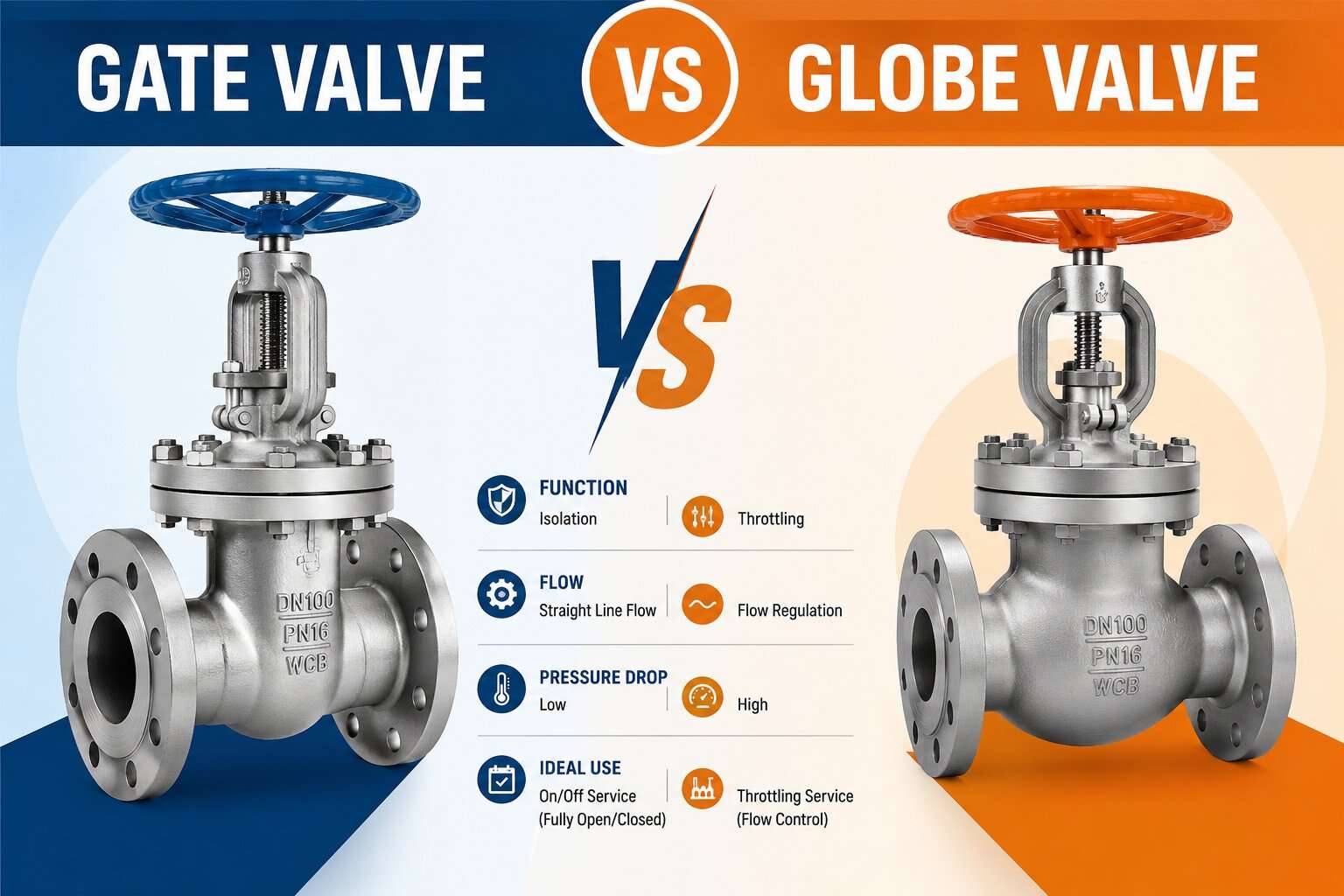
pick a gate valve for on/off shutoff, and a globe valve for flow control. Read on for the full globe valve vs gate valve comparison.
A globe valve and a gate valve look similar on a pipeline. Both use a handwheel. Both take several turns to open or close. But they work in very different ways, and picking the wrong one can cost you in energy, wear, and downtime. This guide breaks down the globe valve vs gate valve question in plain terms, so you can choose the right valve for your line.
What Is a Gate Valve?
A gate valve uses a flat gate. The gate slides up to open the flow path. It slides down to block it. When the gate is fully up, the pipe stays clear. Flow moves straight through with almost no resistance. This is why gate valves cause very little pressure drop.
A gate valve seals in both directions. That makes it a strong choice for isolation. But it is a poor choice for throttling. Partly open, the gate creates a narrow gap. Fluid rushes through that gap at high speed. This can wear down the seat over time.
Gate valves come in two stem types. A rising stem shows you the valve position from outside. A non-rising stem keeps the stem inside the body. This design works well for buried lines with no room above.
What Is a Globe Valve?
A globe valve uses a round body and a disc. The disc sits above a seat inside the body. Flow must turn as it passes through. This turn gives you control over the flow rate.
Turn the handwheel a little, and the disc lifts a little. Flow increases in a steady, even way. This makes a globe valve a good choice for throttling.
The turn in the flow path also creates resistance. A globe valve has a higher pressure drop than a gate valve of the same size. You trade some flow efficiency for better control.
Globe Valve vs Gate Valve: Key Differences
Here is how the two valves compare on the points that matter most for the globe valve vs gate valve decision.
Flow control: A globe valve throttles well. A gate valve does not.
Pressure drop: A gate valve has less resistance when fully open.
Flow direction: A gate valve works in both directions. Many globe valves work in one direction only. Look for the flow arrow on the body before you install one.
Sealing: A globe valve often seals tighter because the disc presses straight down on the seat. A gate valve seals well too, but a worn or scored gate can leak.
Maintenance: A globe valve is often easier to service. You can reach the disc and seat without removing the whole valve from the line. A gate valve's seats sit deeper in the body, so repairs can take more work.
Cost: A gate valve usually costs less. Its build is simpler.
Gate Valve vs Globe Valve: Which Standard Applies?
Standards tell you what a valve must meet before it leaves the factory.
Gate valves for oil, gas, and process lines often follow API 600. This standard covers bolted-bonnet steel gate valves.
Globe valves in the same industries often follow API 623. This standard covers steel globe valves from 2 to 24 inches.
Both valve types also follow ASME B16.34 for pressure and temperature ratings, and ASME B16.5 for flange dimensions. Always check which standard a supplier's valve meets before you compare prices. A cheaper standard may look similar but perform very differently under load.
Globe Valve vs Gate Valve: Where Each One Fits Best
A gate valve fits best where the line only needs full open or full shut. Think water mains, oil and gas pipelines, and fire protection risers.
A globe valve fits best where flow needs regular adjustment. Think boiler feedwater, steam lines, and cooling water systems.
If your line runs wide open for months at a time, a gate valve saves you energy and cost. If your line needs a steady, tunable flow, a globe valve gives you that control.
Gate Valve vs Globe Valve: How to Pick the Right One
Ask yourself these questions before you order.
- Does the line need full shutoff only, or does it need flow control?
- How much pressure drop can your system accept?
- Does the fluid need to flow in one direction or both?
- What temperature and pressure will the valve see in service?
- Will the valve open and close often, or stay in one position for years?
- Your answers point you to the right choice. Full shutoff with low pressure drop points to a gate valve. Steady flow control points to a globe valve. When in doubt, ask a valve engineer to review your line conditions before you order.
FAQs
Globe valve vs gate valve: which one is better?
Neither one is better on its own. A gate valve wins for full shutoff with low pressure drop. A globe valve wins for flow control. The right choice depends on your application, not on which valve is better in general.
Can I use a gate valve to throttle flow?
No. A partly open gate valve creates a narrow gap. High-speed flow through that gap wears down the seat and gate fast. Use a globe valve or a dedicated control valve instead.
Which valve has a higher pressure drop?
A globe valve has a higher pressure drop. Its curved flow path gives it precise control, but that same path adds resistance.
Do gate valves work in both directions?
Yes, most gate valves seal in either direction. Most globe valves have one preferred flow direction. Check the arrow on the body before you install one.
Which valve is easier to maintain?
A globe valve is often easier to service, since the disc and seat sit near the top of the body. A gate valve's seats sit lower and can be harder to reach.
Kunjian manufactures gate valves that meet API 600 and ASME B16.34 requirements, ready for isolation duty on oil, gas, and water lines. Browse our gate valve range, or contact us with your line conditions for a spec recommendation.
Recent Post
Leave Your Comments

Zhuhai Kunjian Technology Co.,Ltd

Have a question or need a quote? Fill out this form and our team will get back to you quickly!