


Blogs
ball valve vs globe valve
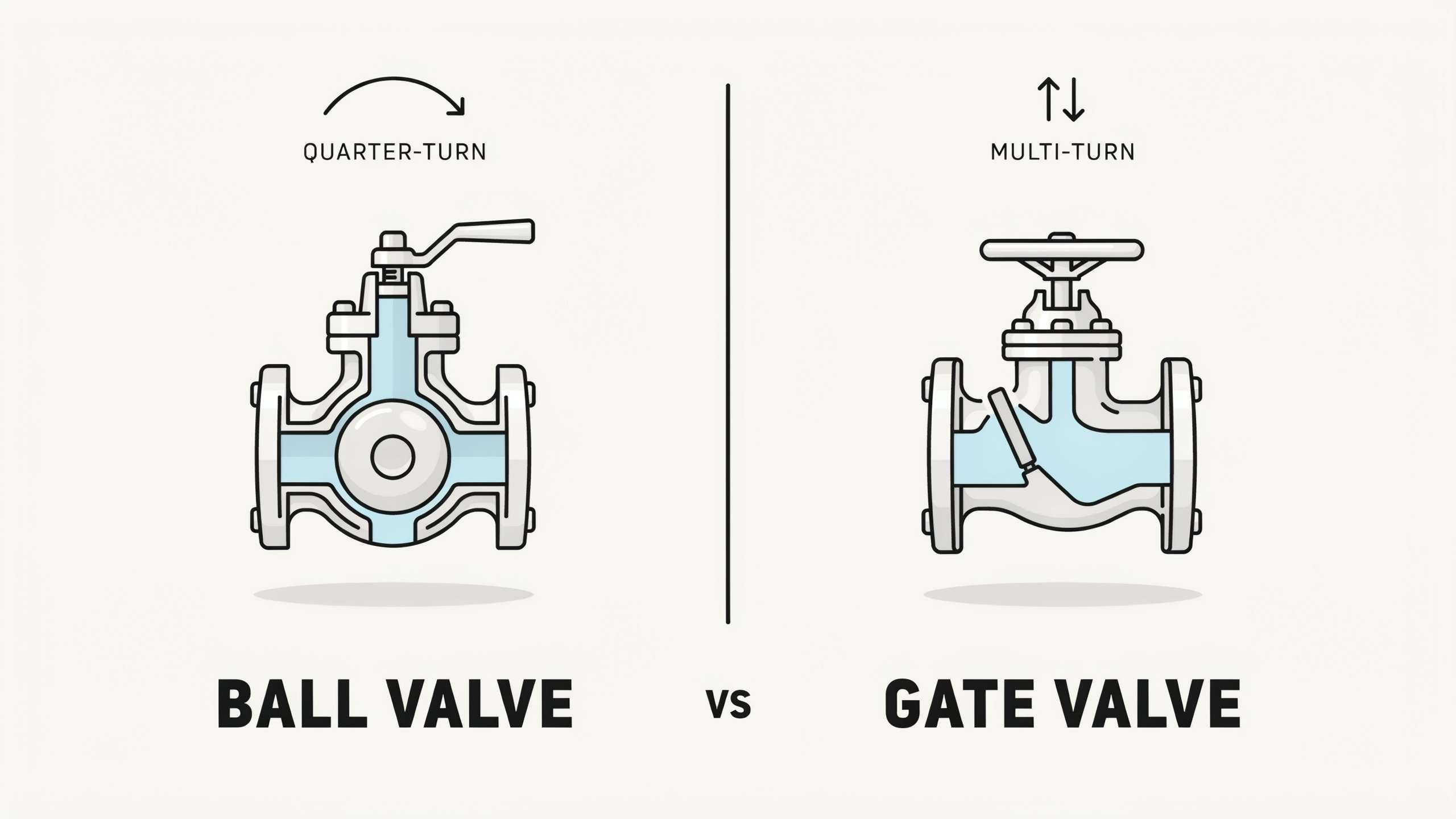
Pick a ball valve for fast, tight shutoff, and a globe valve for precise flow control. Read on for the full ball valve vs globe valve comparison.
A ball valve and a globe valve both stop or start flow in a pipe. That is where the similarity ends. One uses a quarter turn. The other uses a stem that winds up and down. The ball valve vs globe valve choice comes down to what your line actually needs: fast shutoff, or fine control.
How a Ball Valve Works
A ball valve uses a ball with a hole through the middle. Turn the handle a quarter turn, and the hole lines up with the pipe. Flow passes straight through. Turn it another quarter turn, and the ball blocks the path completely.
This straight bore is why a ball valve has very low pressure drop when open. Fluid barely notices the valve is there. The quarter-turn action also makes a ball valve fast to open and close, which is why plants use it for emergency shutoff.
A standard ball valve is not built for partial-open service. At partial opening, flow squeezes through a small gap. This can wear the seat and cause noise or vibration. Special V-port ball valves handle some throttling, but a plain ball valve should stay fully open or fully shut.
How a Globe Valve Works
A globe valve uses a stem and a disc, not a ball. Turn the handwheel, and the stem moves the disc up or down over a seat. Raise the disc, and flow increases. Lower it, and flow drops. Turn it all the way down, and the valve shuts.
This up-and-down motion gives you fine control. Small turns of the handwheel make small, steady changes in flow. That is why plants pick globe valves for jobs that need constant adjustment, not just on and off.
The flow path inside a globe valve bends more than once. That bend adds resistance. A globe valve has a higher pressure drop than a ball valve of the same size, even when fully open.
Ball Valve vs Globe Valve: Key Differences
Operation: A ball valve turns a quarter turn. A globe valve needs many turns of the handwheel.
Throttling: A globe valve throttles well. A standard ball valve does not.
Pressure drop: A ball valve has much lower pressure drop when fully open.
Sealing: A soft-seated ball valve can reach bubble-tight shutoff. A globe valve with a metal seat allows a small amount of leakage by design.
Space: A ball valve fits in a tighter space. A globe valve needs room above for the stem to travel.
Speed: A ball valve opens and closes in one motion. A globe valve takes longer because of the multiple turns.
Globe Valve vs Ball Valve: Cost and Maintenance
Cost is not as simple as one valve always costing less. In smaller sizes, a globe valve can cost less than a ball valve of the same rating, because the ball and seat need precise machining. In larger sizes and higher pressure classes, a ball valve can become the more cost-effective option.
Maintenance follows a similar pattern. A ball valve used only for on-off duty wears very little and needs little upkeep. A globe valve used for constant throttling wears at the seat and disc over time, and may need the seat reground or the packing replaced.
Ask your supplier for pricing and service data at your actual size and class. Do not assume one valve type is always cheaper.
Ball Valve vs Globe Valve: Which Standard Applies?
A ball valve used in pipeline service often follows API 6D. This standard sets requirements for the ball, seats, and pressure testing.
A globe valve often follows BS 1873, along with ASME B16.34 for pressure and temperature ratings. Some globe valves built for tough control duty also carry hardfaced trim to resist wear from high-speed steam or erosive fluids.
Check which standard a supplier's valve meets before you compare prices. A valve without a named standard may not hold up the same way in service.
Ball Valve vs Globe Valve: Where Each One Fits Best
A ball valve fits best where the line needs fast, reliable isolation. Think emergency shutoff, gas pipelines, and cryogenic lines carrying LNG or liquid nitrogen. Many cryogenic ball valves use an extended stem to keep the packing warm and safe.
A globe valve fits best where flow needs regular, fine adjustment. Think steam control, boiler feedwater, and cooling water systems that run at a partial setting for long periods. That split in duty is the practical core of the ball valve vs globe valve decision for most plants.
Globe Valve vs Ball Valve: How to Pick the Right One
Ask these questions before you order.
- Does the line need fast on-off action, or steady flow control?
- How much pressure drop can your system afford?
- Will the valve run partly open for long periods?
- Does the service involve steam, cryogenic fluid, or clean gas?
- How much space do you have for the valve body and stem?
Fast, tight shutoff with low pressure drop points to a ball valve. Steady, adjustable flow points to a globe valve. If you are unsure, share your line conditions with a valve engineer before you order.
FAQs
Ball valve vs globe valve: which one is better?
Neither wins in every case. A ball valve wins for fast, tight shutoff with low pressure drop. A globe valve wins for steady flow control. Match the valve to the job, not the other way around.
Can a ball valve be used to throttle flow?
A standard ball valve should not be used this way. Partial opening wears the seat and can cause noise. A V-port ball valve improves this, but a globe valve is still the more reliable choice for constant throttling.
Which valve has a lower pressure drop?
A ball valve has a lower pressure drop when fully open, because the bore runs straight through. A globe valve has a higher pressure drop due to its bent flow path.
Which valve seals tighter?
A soft-seated ball valve usually seals tighter and can reach bubble-tight shutoff. A globe valve with a metal seat allows some leakage by design, though it can still perform well in control duty.
Is a ball valve or a globe valve better for cryogenic service.
Ball valves are more common in cryogenic service, especially with an extended stem to protect the packing. Globe valves are less common at very low temperatures but remain standard for high-temperature steam control.
Kunjian manufactures ball valves, including cryogenic-rated designs built for LNG and industrial gas service. Browse our ball valve range, or read our gate valve vs ball valve comparison for a look at a third common option. Contact us with your line conditions for a spec recommendation.
Recent Post
Leave Your Comments

Zhuhai Kunjian Technology Co.,Ltd

Have a question or need a quote? Fill out this form and our team will get back to you quickly!