


Blogs
Plug Valve vs Ball Valve
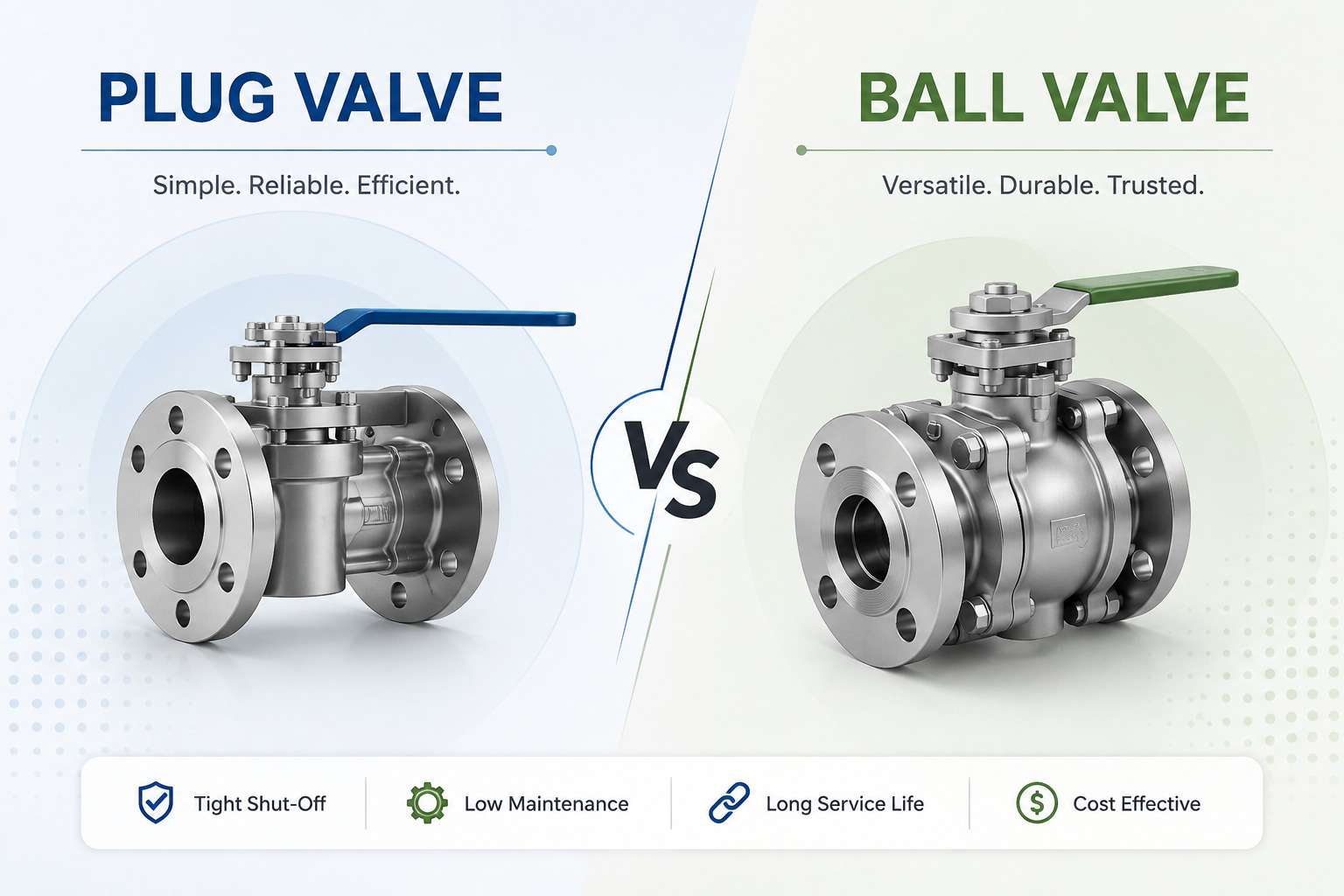
Choose a ball valve for clean media, frequent cycling, and lower automation cost. Choose a plug valve for slurries, abrasive media, or lines where a trapped cavity could cause contamination or seizing. Both are quarter-turn valves, but they seal differently, and that difference drives almost every buying decision below. see our guide to gate valve vs ball valve
How Each Valve Works
A plug valve uses a tapered or cylindrical plug with a hole through it. The plug sits inside a matching seat in the valve body. A quarter turn lines up the hole with the pipe to open it, or blocks it to close it. The plug presses directly against the body or a sleeve across its whole surface. This mechanical interference creates the seal, so the seal does not depend on line pressure.
A ball valve uses a round ball with a hole through it instead. Two soft seats, usually PTFE, hold the ball in place. Line pressure pushes the ball against the downstream seat and creates the seal. Engineers call this pressure-assisted sealing. Because the ball only touches a narrow ring on each seat, it needs far less torque to turn than a plug valve does.
The Dead-Space Difference: Why It Matters for Slurry and Sanitary Service
Standard ball valves have a cavity between the ball and the body. Media can sit in this cavity even after you close the valve. In water or clean gas service, this rarely matters. In food, beverage, or pharmaceutical lines, it does. Product trapped in that cavity can spoil or grow bacteria. Manufacturers solve this with sanitary ball valves that use a cavity-filled, fully encapsulated PTFE seat, which removes the trapped space entirely.
A plug valve avoids this problem by design. The solid plug fills the body, so there is no cavity for media to collect in. This is one reason plug valves handle slurries, sludge, and other media that can settle or solidify better than a standard ball valve. If your line carries anything that spoils, crystallizes, or polymerizes, this single design difference should drive your choice.
Torque, Automation Cost, and Availability
A plug valve's plug presses against the body across a large surface, so it takes more torque to turn than a ball valve of the same size. A ball valve's narrow seat contact needs much less force. This matters most when you automate the valve, because actuator size and price scale directly with torque. A bigger plug valve often needs a bigger, more expensive actuator than a ball valve at the same size and pressure class.
Real field experience backs this up. On an Eng-Tips forum thread about gas pipeline valves, one engineer noted that for large ball valves, "the cost of the operator can be more than the valve" itself, especially on floating-ball designs that need bigger operators. Actuator cost is not a side note. It can outweigh the valve's own price tag.
Availability is another factor competitors rarely mention. An experienced end user noted that plug valves today often come with longer delivery times and higher prices than ball valves, even though plug valves offer better in-line maintenance. The same engineer added a telling detail from 20 years in maintenance: they had repaired hundreds of ball valves but overhauled only a handful of plug valves in that time. Before you specify a plug valve, check lead times with your supplier. It can change the decision.
Can Either Valve Be Throttled?
No. A ball valve's round port creates a fast, uneven flow change as it opens, which erodes the seat over time. A plug valve's rectangular port behaves a bit more predictably, but manufacturers still do not recommend either type for sustained flow control.
Real-world practice is less absolute than that rule suggests. On an Eng-Tips thread about throttling natural gas, one engineer reported that operators on Alaska's North Slope successfully throttle manually operated ball valves at several hundred psi differential pressure, without problems. This does not mean you should default to throttling with a standard valve. It means the "never throttle" rule has real exceptions at lower cycle counts with careful operation. If your application needs frequent or precise flow control, specify a V-port ball valve or a purpose-built control valve instead of forcing a standard plug or ball valve to do that job. You can also compare other quarter-turn options such as butterfly valves.
Applications: Where Each Valve Is Actually Used
Plug valves show up in oil and gas gathering lines, chemical processing, and wastewater and sludge handling, anywhere abrasive or fouling media passes through. Their cavity-free design also suits hydrocarbon blowdown service, where a tight, dependable seal matters more than fast cycling. For high-pressure ball valve applications, see our trunnion-mounted ball valve.
Ball valves dominate clean gas pipelines, water distribution, HVAC systems, and general industrial shutoff duty. Sanitary-rated ball valves, not standard ones, cover food, beverage, and pharmaceutical lines.
Plug Valve vs. Ball Valve: Comparison Table
| Factor | Plug Valve | Ball Valve |
|---|---|---|
| Sealing method | Mechanical interference (plug against body) | Pressure-assisted (ball against soft seat) |
| Dead space/cavity | None; cavity-free by design | Present in standard designs; sanitary versions remove it |
| Torque | Higher | Lower |
| Automation cost | Generally higher, due to torque | Generally lower |
| Availability | Often longer lead times today | Usually more readily available |
| Throttling | Not recommended; rectangular port more predictable | Not recommended; exceptions exist in low-cycle field use |
| Best media | Slurries, abrasives, fouling fluids | Clean gases and liquids; sanitary media with correct seat |
| Maintenance | In-line servicing common | Often replace-to-fix on standard designs |
FAQs
Is a plug valve the same as a ball valve?
No. Both are quarter-turn valves, but a plug valve seals through direct contact between the plug and body, while a ball valve seals through a soft seat pressed by line pressure. That difference drives most of the other distinctions between them.
Can a ball valve be used for throttling?
Manufacturers generally advise against it, since the round port wears the seat unevenly. Field reports from Eng-Tips show manual ball valves throttling gas successfully at low cycle counts, but a V-port ball valve or dedicated control valve is the safer choice for regular flow control.
Which valve has a dead space where media can get trapped?
The standard ball valve does. Its ball-and-seat design leaves a cavity that can trap media. A plug valve has no such cavity. Sanitary ball valves close this gap with a cavity-filled seat, but you must specify that design, not a standard one.
Which valve is cheaper to automate?
Ball valves, in most cases. Lower torque means a smaller, less expensive actuator. On large valves, actuator cost can exceed the valve's own price, so this difference compounds on bigger projects.
Are plug valves harder to source than ball valves?
Often, yes, based on current field reports. Confirm lead time with your supplier before specifying a plug valve on a time-sensitive project, since ball valves are typically more readily stocked.
Which valve is better for slurry or abrasive media? The plug valve. Its cavity-free, solid design resists the buildup and seizing that abrasive or settling media can cause inside a standard ball valve's cavity.
Final Recommendation
Pick a ball valve when your media is clean, your cycle count is high, and you want lower automation cost. Pick a plug valve when your media is abrasive, prone to settling, or sensitive to trapped residue, and you can accept higher torque and possibly longer lead times. Confirm actuator sizing and current delivery times with your supplier before you finalize either choice, since both factors shift the total cost more than the valve price alone suggests.
Recent Post
Leave Your Comments

Zhuhai Kunjian Technology Co.,Ltd

Have a question or need a quote? Fill out this form and our team will get back to you quickly!